

Sonderausgabe der Zeitschrift „Nature Conservation“
Biology and conservation of wetland fishes in Europe
Eine Mitteilung von Josef Wanzenböck, Universität Innsbruck, vom 19.10.26:
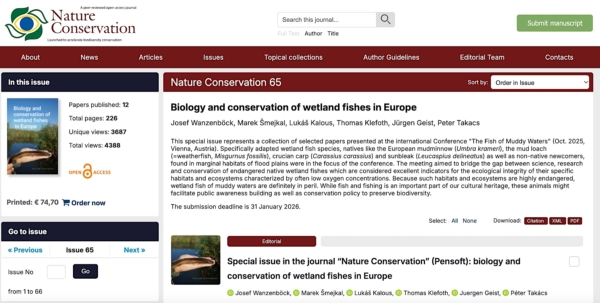
Many of you have probably noticed that a special issue in the journal „Nature Conservation“ containing some articles developed from presentations at the conference was published recently. If you are interested, have a look at: https://natureconservation.pensoft.net/issue/5260/
Liebe ehemalige Konferenzteilnehmer [„The Fish of Muddy Waters“],
Josef Wanzenböck
Nature Conservation 65 – Biology and conservation of wetland fishes in Europe
This special issue represents a collection of selected papers presented at the international Conference „The Fish of Muddy Waters“ (Oct. 2025, Vienna, Austria). Specifically adapted wetland fish species, natives like the European mudminnow (Umbra krameri), the mud loach (=weatherfish, Misgurnus fossilis), crucian carp (Carassius carassius) and sunbleak (Leucaspius delineatus) as well as non-native newcomers, found in marginal habitats of flood plains were in the focus of the conference. The meeting aimed to bridge the gap between science, research and conservation of endangered native wetland fishes which are considered excellent indicators for the ecological integrity of their specific habitats and ecosystems characterized by often low oxygen concentrations. Because such habitats and ecosystems are highly endangered, wetland fish of muddy waters are definitely in peril. While fish and fishing is an important part of our cultural heritage, these animals might facilitate public awareness building as well as conservation policy to preserve biodiversity.
In eigener Sache: