

Press release from GEOMAR Helmholtz Centre for Ocean Research Kiel dated 11 May 2026:
A better life under protection? The ALKOR Expedition AL652 investigates fish communities and algae in the Baltic Sea
How do marine protected areas affect fish stocks and food webs? And to what extent do algal reefs contribute to carbon sequestration in the ocean? These are just two of the questions that a research team from the GEOMAR Helmholtz Centre for Ocean Research Kiel hopes to answer during the AL652 expedition, which set sail at the weekend. The voyage will take them to Baltic Sea protected areas within the German Exclusive Economic Zone.
Do marine protected areas improve the ecological status of fish populations? How do movement patterns, habitats and interactions within the food web change when human interference is reduced? These are just some of the questions that the recently launched ALKOR expedition ‘IMBOMPA’ aims to answer.
Offshore marine protected areas in the Pomeranian Bay, Kadetrinne and Fehmarn Belt
The name of the expedition stands for “Improved Monitoring of Baltic Offshore Marine Protected Areas”. It is divided into two phases with different research focuses. Whilst the first part, led by Dr Jan Dierking and Femke Thoben, will investigate fish communities and food webs, the second part, led by Prof. Dr Jens Greinert and Anne Hennke, will focus on reefs and algal populations in offshore marine protected areas of the Baltic Sea.
This year’s focus is on the Pomeranian Bay, one of the largest offshore marine protected areas in the Baltic Sea. The Kadetrinne and Fehmarnbelt protected areas will also be examined.
How effective are marine protected areas?
For the fish surveys, the researchers are using methods that are as non-invasive as possible. Instead of trawling, they use acoustic telemetry: individual fish are fitted with small transmitters, whose signals are recorded by a network of receivers. This allows their locations and migratory movements to be tracked without harming the animals. In addition, the team analyses genetic traces from stomach contents and examines the structure of food webs.
By combining movement data, food analyses and habitat maps, a comprehensive picture is emerging for the first time of how fish actually use these protected areas.
“We want to know whether marine protected areas actually help to stabilise fish communities and food webs,”
… says Dierking, a marine biologist at GEOMAR.
The research is part of the SCHUFI project (“Support for the development and implementation of conservation measures for fish”), funded by the Federal Agency for Nature Conservation (BfN), which is developing new methods for the most gentle possible monitoring of marine protected areas as part of the Natural Climate Protection Action Programme (ANK).
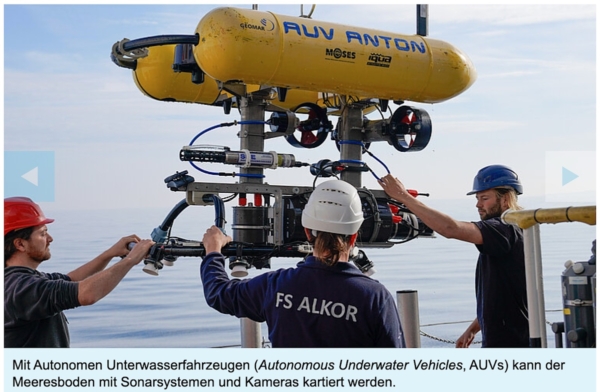
Photo: Julia Gehringer.
The Baltic Sea as a test system for global change
The Baltic Sea is regarded as a ‘time machine’, a sensitive test system for global change: rising temperatures, falling oxygen levels and human activity are drastically altering its ecosystems. Protected areas are seen as an important measure, but their true effectiveness can only be assessed if reliable data is available. Such data is being collected during the AL652 expedition. It can serve as a baseline against which future changes can be measured. In this way, the expedition contributes to the targeted further development of conservation strategies and to meeting the requirements of the European Marine Strategy Framework Directive.
“Designating protected areas is not an end in itself,” says Dierking. “Only when we understand how animals use them and how food webs are changing can we assess whether they are fulfilling their purpose.”
Expedition at a glance
Name: AL652 (Improved Monitoring of Baltic Offshore Marine Protected Areas, IMBOMPA)
Duration: 9 May to 2 June 2026
Start / End: Kiel
Cruising area: Baltic Sea
More information:
https://www.geomar.de/n10280 Images available for download
https://www.oceanblogs.org/baltic-rvalkor/ Blog about the expedition