

The GeMoLaR project will be presented in detail at the GfI conference.

GeMoLaR – Genetic Monitoring for the Reintroduction of Atlantic Salmon in the Rhine Catchment
The Rhineland-Palatinate University of Technology Kaiserslautern–Landau (RPTU) is leading the “GeMoLaR” project. For many years, research in freshwater species conservation has been conducted within the Ecotoxicology & Environment working group at the Institute for Environmental Sciences (iES Landau) and at the Eußerthal Ecosystem Research Facility of RPTU.
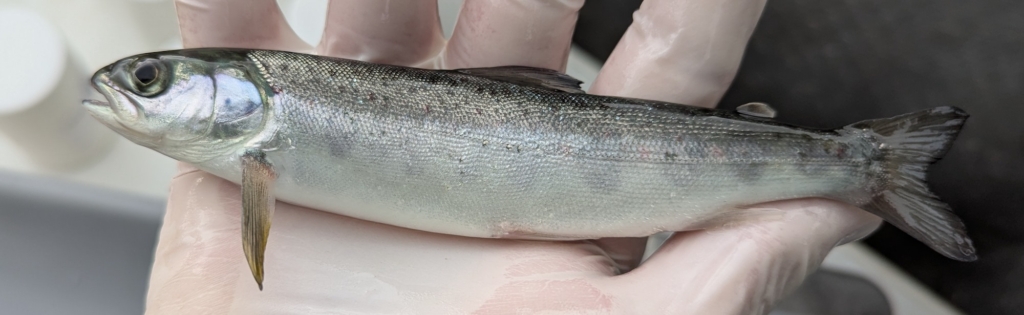
Genetic Monitoring of Returning Salmon
Salmon are a characteristic fish species in many large European river systems. Unfortunately, the number of salmon returning from the sea to the Rhine is not as high as desired. Genetic monitoring of returning salmon is intended to address various questions that will help to optimise salmon management.
GeMoLaR Website
https://nuw.rptu.de/ags/oekotox/forschung/fish-water-ecol/aktuelle-projekte/gemolar
The Project
Reintroduction Measures for the Benefit of Atlantic Salmon (Salmo salar)
The GeMoLaR model and demonstration project, embedded within an internationally coordinated programme involving all riparian states, aims to evaluate and optimise reintroduction measures for Atlantic salmon (Salmo salar) throughout the entire German Rhine system. To this end, standardised genetic parentage analyses are used to obtain comparable insights into different stocking measures and to derive practical recommendations.
Project Presentation at the GfI Annual Conference
As part of the GfI Annual Conference, key findings from the project—then completed after five years—as well as identified tasks and challenges for the future implementation of reintroduction measures for migratory fish in the Rhine system will be presented in several talks (lecture session on Friday from 9:20 to 12:15).
Following the lecture series, project and cooperation partners are warmly invited to a working lunch. During this session, the findings will be discussed in depth with regard to the future genetic monitoring of “Rhine salmon”.
Project Summary
The Atlantic salmon is an important indicator species for healthy aquatic ecosystems and plays a significant role in biodiversity conservation. Historically, salmon were widespread in the Rhine; however, migration barriers, poor water quality and overfishing led to a dramatic decline in stocks, and by the 1950s the species was considered extinct in the river. Since the 1980s, programmes for the restoration of the Rhine and the recovery of salmon populations have been initiated. Despite these efforts, salmon are still not able to survive independently in the Rhine and therefore continue to be bred in hatcheries and stocked into tributaries.
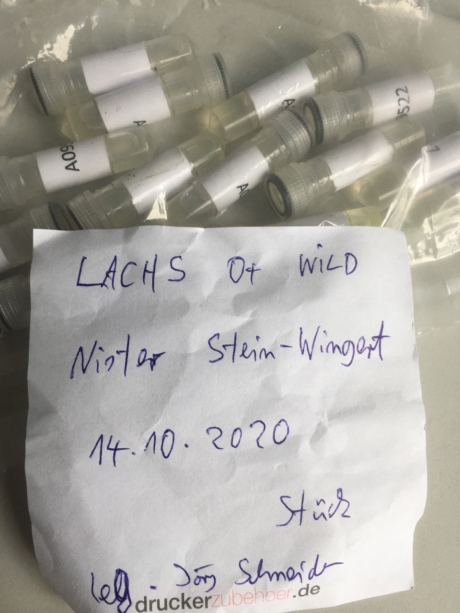
Within the framework of this model and demonstration project, funded by the Federal Ministry of Food and Agriculture, comprehensive genetic monitoring was carried out for the first time. This enabled individual genotyping of all broodstock used for stocking production for the Rhine between 2019 and 2021. This allows both precise assignment of wild-caught fish to their origin and evaluation of stocking measures. Using molecular genetic methods, new insights into the advantages and disadvantages of existing breeding and stocking strategies are to be gained in order to develop optimised stocking management. Until now, stocking measures have always been costly and labour-intensive, and their success rates have remained unclear.
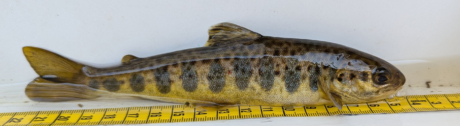
The GeMoLaR project aims to assign captured salmon to their respective parent fish using genetic parentage analyses, thereby assessing the effectiveness of stocking measures. Spawning returners were also analysed to determine their origin and the stocking strategies applied. Differences, for example in breeding methods—such as the origin and number of parent fish, as well as the age and timing of stocking—may also influence the genetic diversity of stocked fish. To date, a systematic evaluation of these measures has been lacking, making it difficult to improve strategies.
Further information:
https://nuw.rptu.de/ags/oekotox/forschung/fish-water-ecol/aktuelle-projekte/gemolar
https://www.fisaonline.de/forschung-strategisch-analysieren/forschungsfoerderung-planen/…
Some impressions
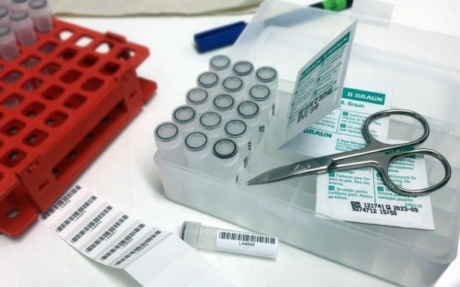
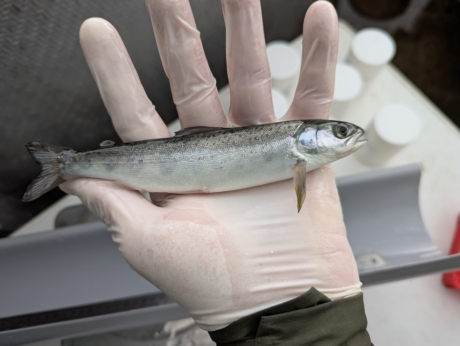
All figures: (c) Project GeMoLaR