

Jena/Cologne. Press release from the Leibniz Institute on Ageing Research – Fritz Lipmann Institute (FLI) dated 24 March 2026:
Ageing in fast motion: short-lived fish provides new insights into the ageing immune system
With increasing age, the immune system loses its effectiveness, leading to increased susceptibility to infections and age-related diseases. Researchers at the Leibniz Institute on Ageing Research (FLI) have used the short-lived turquoise killifish (Nothobranchius furzeri), researchers at the Leibniz Institute on Ageing Research (FLI) have created a comprehensive molecular and cellular map of immune ageing in a vertebrate. Using a multi-omics approach, they identified key features of immune ageing and demonstrated that essential processes of immune ageing are evolutionarily conserved. This makes the killifish a suitable model for investigating the mechanisms of immune ageing and testing potential interventions.
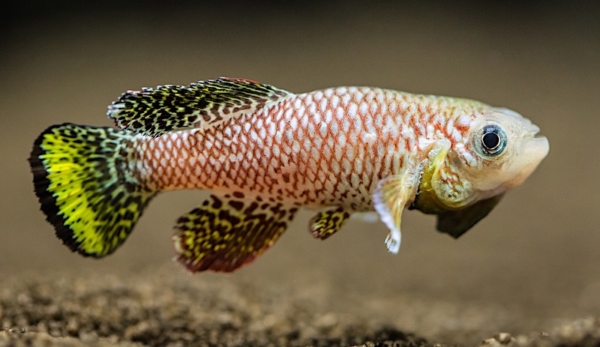
Nothobranchius furzeri Copyright: FLI / Nadine Grimm
Our immune system protects the body from infections and harmful changes throughout our lives. However, as we age, it loses its effectiveness, thereby increasing the risk of disease. But what happens when the immune system ages – and is it possible to halt this process?
Key features of immune ageing
In a study now published in Nature Aging (cover story), researchers at the Leibniz Institute on Ageing Research – Fritz Lipmann Institute (FLI) have taken an important step towards answering these questions. They utilised the extremely short lifespan of the turquoise dwarf cichlid (Nothobranchius furzeri) and identified key features of immune ageing within a matter of weeks. This makes this model particularly well-suited for rapid mechanistic discoveries and the testing of potential interventions.
Analytical methods
The study combines various analytical methods, such as cytometry, single-cell transcriptomics, proteomics, AI-supported image classification, in situ imaging, histology and functional immune assays. With the newly established open-access multi-omics resource KIAMO, it thus offers a comprehensive overview of immune ageing in a short-lived vertebrate. The work began at the Max Planck Institute for Biology of Ageing (MPI-AGE) in Cologne and was later continued at the FLI in Jena.
The researchers demonstrate that key features of immune ageing occur in killifish and are strikingly similar to those in mammals and humans. The study thus provides unique insights into the mechanisms of so-called ‘immune ageing’. As killifish live for only a few months, ageing processes can be observed in fast-forward over the course of a few weeks – a major advantage for experimental research.
“The killifish system never ceases to surprise us, as it demonstrates that key aspects of immune ageing – at both the molecular and cellular levels – are highly evolutionarily conserved,” says Prof. Dario Riccardo Valenzano, a pioneer in killifish research and Scientific Director of the FLI. “Our results show that killifish are ideally suited as a model for testing interventions that can improve systemic ageing by specifically influencing immune ageing.”
Read more:
IDW-online https://idw-online.de/de/news868104
Original publication:
Spontaneous aging-associated inflammation and genome instability in the immune system of turquoise killifish. Morabito G, Dönertas HM, Sperti L, Seidel J, Poursadegh Zonouzi A, Poeschla M, Valenzano DR. Nat Aging. 2026, 6(3):665-681. DOI: 10.1038/s43587-026-01086-2.
Photo in text, background photo: The turquoise killifish (Nothobranchius furzeri) provides a powerful experimental platform for investigating immune ageing in vertebrates and accelerating the development of strategies to improve health in old age. Copyright: FLI / Nadine Grimm